
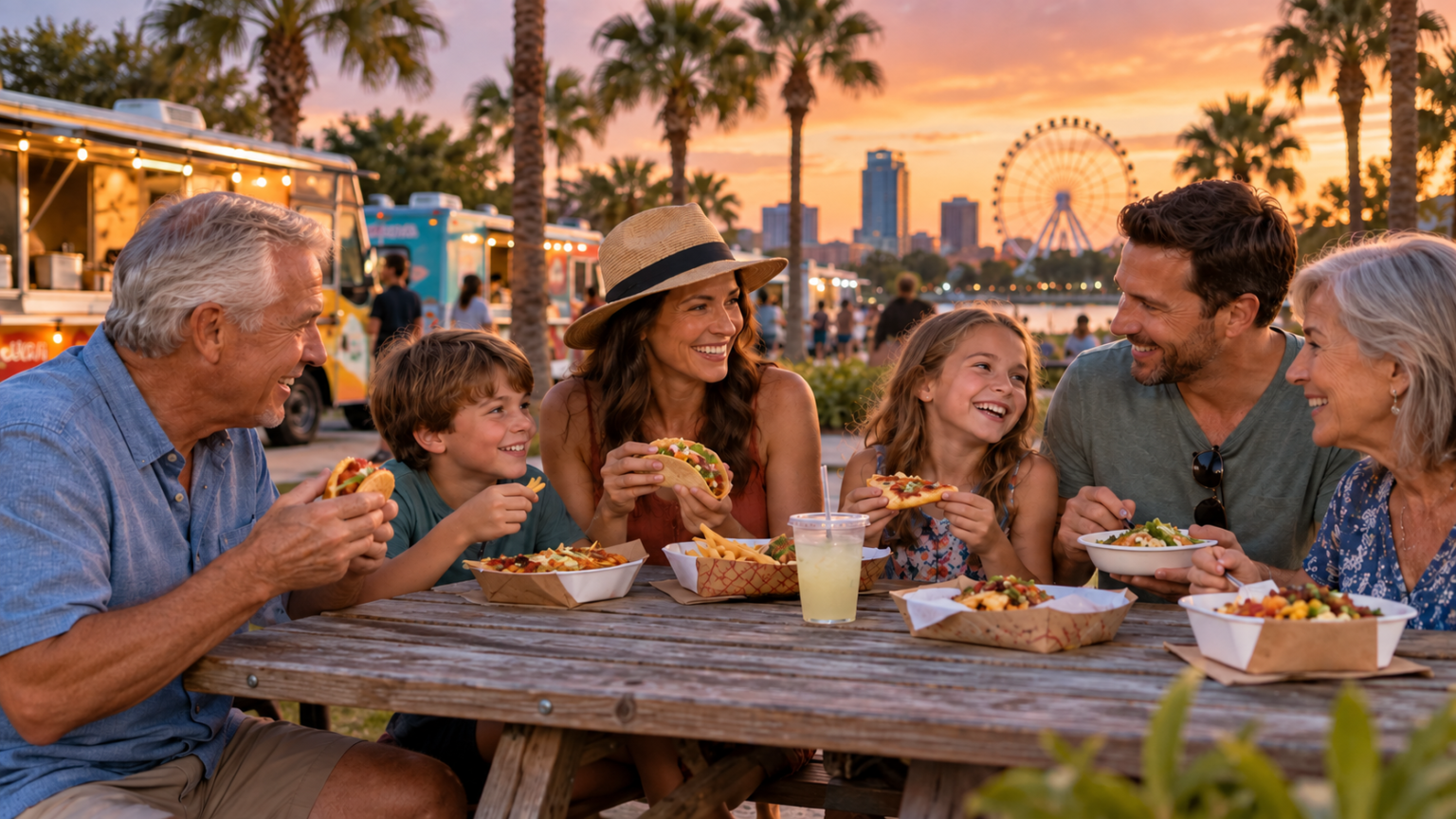
A family food shortlist can reduce dinner debates without forcing everyone to choose an exact dish hours in advance. Gather appetites, select a few categories and give each person a workable alternative. Use this hotel-to-dinner planning method for Food Trucks Heaven, then check current vendor menus, prices and service before turning an idea into an order.
The hotel room is often a better place for a short dinner conversation than the ordering queue. Everyone can explain what they want before menus, hunger and competing suggestions make the decision harder. A useful family food shortlist is brief and flexible. It prepares your group to choose from current options rather than creating promises that a vendor cannot guarantee.
Ask Three Different Questions
Start with appetite: does each person want a full meal, a smaller order or time to decide? Then ask about food categories they would enjoy. Finally, ask whether there is anything they need clarified before ordering. Keeping these questions separate prevents a cuisine preference from being mistaken for a complete meal plan.
Give every person room to answer. An enthusiastic adult can accidentally fill the shortlist with their own favorites before quieter relatives speak. Children can name a familiar category without needing to understand the entire venue. The point is to collect usable preferences, not to make everybody defend a sophisticated dinner choice.
Choose Categories Before Exact Dishes
A category gives the family direction while allowing for menu changes. An exact item from an old photo can create disappointment if it is unavailable. Ask each person to identify one preferred category and one alternative they genuinely like. A backup is useful only when the diner is comfortable choosing it.
Food Trucks Heaven has 50+ food options overall. Browse the vendor directory for ideas, but do not interpret the overall variety as simultaneous availability. Operating vendors, current menus and service windows determine what the family can actually order during the visit.
Keep the Shortlist Small Enough to Use
Write one line per person or household: preferred category, alternative and one question to check. A long collection of screenshots can recreate the same decision overload you were trying to solve. The note should make sense at a glance when you arrive, even if someone else has to read it.
For larger families, identify any overlap without forcing everyone into it. Two people may want the same vendor, making collection simpler, while another prefers something different. The shortlist coordinates choices; it does not require a unanimous menu. Different orders can still lead to one shared meal and conversation.
Clarify Spending Without Choosing for Everyone
Decide whether each household pays separately or a named person has offered to cover specified purchases. If the family wants a spending limit, discuss it before browsing. Include drinks and intended extras so the figure reflects the meal people expect rather than only the first item they see.
Food Trucks Heaven offers free entry and free parking, while individual vendors set food and drink prices. The vacation dining-budget guide provides more planning context. Confirm current totals at the counter; a category shortlist is not a price quote and should not be used as one.
Add the Logistics That Could Change the Choice
Check current hours and the route before leaving the hotel. Normal venue hours are noon to 10:30 p.m. Sunday through Thursday and noon to 11:30 p.m. Friday and Saturday, with individual vendors varying. If you need a particular kitchen, confirm its service rather than relying only on the venue’s closing time.
Use 5403 W Irlo Bronson Memorial Hwy, Kissimmee, FL 34746 for directions. Check actual weather as well: indoor A/C seating is available, but the venue is not wholly indoors. Tell the family that browsing and collection can involve outdoor movement so the plan matches the conditions you expect to encounter.
Turn the Shortlist Into a Decision on Arrival
Compare your first choices with the current menus. Ask the saved question about portions, preparation or included components, then decide. If a choice does not fit, move to the agreed alternative instead of reopening every possibility. This is where the small amount of hotel preparation saves the most discussion.
Choose a meeting point and assign collection responsibility before people separate. After the meal, save only the details that will help another visit, such as the vendor name and the component someone enjoyed. Update the shortlist rather than preserving outdated assumptions. A good planning note becomes more useful through specific observations, while the current menu remains the final authority.
Frequently Asked Questions
How many choices should each person list?
One preferred category and one genuine alternative are usually enough for a practical starting point. Add a question that matters to the purchase rather than collecting many screenshots.
Should children choose an exact meal at the hotel?
They can name a preference, but avoid promising an exact item before checking current availability. Explain that the final choice comes from the menus operating during your visit.
Does the directory guarantee a vendor is serving?
No. Use it for preparation, then confirm current vendor service and menu items. Overall venue variety does not mean every option is available at every time.
What makes a useful backup choice?
It should be something the diner actually wants, not merely a category someone else selected for them. Agreeing on a workable alternative keeps a changed menu from restarting the whole dinner debate.
